By Hirushi Jayasekara
Overview
NEO’s viral debut raised a core trust question: Are we buying truly autonomous home helpers or a teleoperated service that sends video, audio, and behavior from our private spaces to train future systems? This article compares promises and fine print, explains why friendly design lowers our guard, and lays out guardrails for the future of home robotics.
1. The Pitch vs. The Product
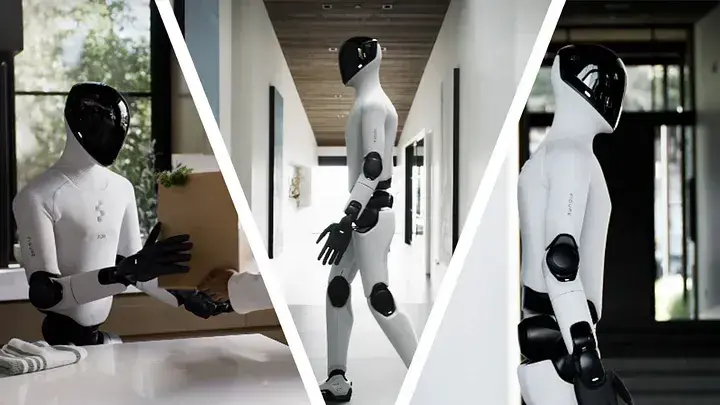
On paper, the pitch is irresistible. A human-scale helper that tidies, does dishes, waters plants, learns your routines, and quietly recharges when done. The NEO site invites you to schedule chores and “come back to a cleaner home every day.” It also introduces Expert Mode. If NEO does not know a task, you can schedule a 1X Expert to guide it so the robot learns while the job gets done. That is teleoperation by design, not a glitch, and it changes the trust equation inside a private home.
2. Why Friendly Design Matters
Soft fabrics, earth-tone colors, knit suits, and quiet tendon-driven motion make NEO feel like furniture rather than a machine. That lowers anxiety and friction to adoption, especially for families. Yet, it also lowers our guard about what the robot can see, record, or transmit. Labels such as "Soft and Safe" or "Pinch Proof" are cues engineered to build comfort. But comfort is great only until it obscures risk.
3. Governance and Trust
To ensure safety before mass adoption, we need clear guardrails: clear labels for teleoperation versus autonomy, geofenced "no-view" zones, on-device processing, and tamper-evident logs. Plain English accountability is essential so that governance arrives before these devices become household staples. We must ensure that friendly design does not mask the reality of surveillance or data collection in our most private spaces.