By E.M Achintha Isuranga Ekanayake
Overview
Did you know that the film "DreadClub: Vampire's Verdict" won awards despite being almost entirely generated by Artificial Intelligence? This feat was made possible by Generative AI—a branch of technology that doesn't just analyze data but creates new content, from text and music to video and code. This article explores how Generative AI is reshaping industries and challenging our understanding of creativity.
1. Transforming Creative Industries
Generative AI is transforming creative fields by automating repetitive tasks and unlocking new possibilities. Artists and filmmakers use tools like MidJourney and Adobe Firefly to instantly create unique visuals, while AI accelerates content creation in marketing and education. Beyond the arts, it is redefining healthcare by accelerating drug discovery and creating detailed medical illustrations for training.
2. Partner or Competitor?
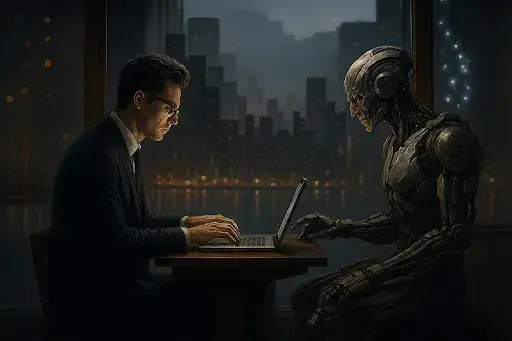
The rise of AI raises a critical question: is it here to replace us or help us? While there are valid concerns regarding copyright, plagiarism, and job displacement—highlighted by controversies over AI copying artistic styles—there is a flip side. AI can serve as a powerful creative partner, handling mundane tasks and freeing humans to focus on high-level decision-making and originality.
3. The Future: Hybrid Creativity
The future of creativity lies in "hybrid creativity," where human imagination works alongside AI innovation. While we must address the hidden environmental costs of training large models through green computing, the road ahead points to new roles like AI Creative Directors and Ethical AI Managers. The future of art may be powered by AI, but it will always be defined by human imagination.